
ADHD, Neurofeedback, Biofeedback & Counseling Clinic of Colorado

DR. Kay Sheehan
MSW, LCSW, Ed.D. is BCIA Board Certified in Biofeedback
– Senior Fellow,
BCIA Board Certified in Neurofeedback - Fellow
EMDR Certified Level II (Highest Level)

Dr. Kay Sheehan is both a licensed clinical social worker (BA, double major: Psychology and Sociology and MSW, University of Minnesota) and also holds her doctorate in Transpersonal Psychology (University of Northern Colorado). She has been practicing over thirty-five years and provides individual therapy, family therapy and marriage/couple therapy, power struggle resolution, neurofeedback therapy, biofeedback therapy, cognitive behavioral therapy (CBT) and EMDR.. She likes to have a more general practice, because it is more interesting to her, and does have because of two areas of real specialty.
One area is that of Applied Psychophysiology and Biofeedback/Neurofeedback Therapy. She has been working in this area for over thirty-five years and is one of the founders of the Colorado Association for Applied Psychophysiology and Biofeedback, a past president twice and has held many board positions. She also was a board member of the national/international Association for Applied Psychophysiology and Biofeedback and gives talks and workshops to other professionals both nationally and internationally, most recently on Traumatic Brain Injuries (TBI).
The second area of specialty is Power Struggle Resolution. Her doctoral dissertation was the only psychotherapeutic model of power struggle resolution in the international literature. The psychotherapeutic model of power struggle resolution she created is for the resolution of power struggles between parents and children/adolescents, between adults, and in the work place, where a power struggle is often euphemistically referred to as a “personality conflict.” She is finishing her book on The Resolution of Power Struggles.
These two areas dovetail in terms of control issues, the applied psychophysiology and biofeedback deals with inner control issues and the power struggle resolution deals with external control issues. Control issues are the bottom line issue for any problem whether it is an individual issue or a relationship issue and hence, how she is able to maintain a more general practice. She has several subspecialties because of these two areas of expertise, among them are: ADHD, learning difficulties, Traumatic Brain Injuries (TBI), bipolar disorder, chronic depression, anxiety, phobias, obsessive compulsive disorder, PTSD, autism, reactive attachment disorder, Asperger’s, addictions and stress related disorders.
In addition to extensive clinical practice, Dr. Sheehan is very knowledgeable in the area of learning disabilities, weaknesses and learning styles of both children/adolescents and adults, having been on the Special Services Team of the Littleton Public School District and as the Staffing Chairperson.
Dr. Sheehan is also a former Assistant Professor at Metropolitan State University (formerly Metropolitan State College) in the Department of Human Services. She continued as a professor until her private practice became full time. She continues to teach and present workshops.
In addition to being certified in Biofeedback from the only recognized certifying organization, Board Certification International Alliance (BCIA), as a Senior Fellow, she is also Board Certified in Neurofeedback as a Fellow.
Dr. Sheehan is also certified at the highest level for EMDR, a psychotherapeutic technique that speeds psychotherapy up by many sessions and is excellent for traumatic events and for habits and patterns in which the individual knows one thing cognitively, but is still stuck emotionally and behaviorally.
In addition to speaking and giving workshops nationally and internationally, she has served as a member of various professional boards, such as the Rocky Mountain Tourette Syndrome Association.
Dr. Sheehan loves to travel and incorporates various techniques and therapies she has found very helpful from other
countries, such as Japan, India, and Shamen in the Peruvian and Brazilian rainforests.
In her time away from her practice, she loves to dance, hike, road bike, ski and spend time with her family dogs, cat and horses. She loves being in nature and loves all flora and fauna.
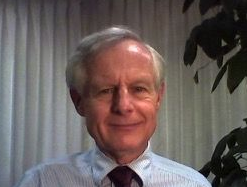
Rod Mers
MA, LPC is BCIA Board Certified in Neurofeedback.
Rod Mers, MA, LPCC, BCN, is a Licensed Professional Counselor in Colorado, Minnesota and Wyoming. Using his education and experience he helps people resolve psychological, neuropsychological and psychophysiological problems so that they can be on a path to reach their potential and live happier and more productive lives.
Rod has a BA degree in Psychology from Illinois State University, an MA degree in Experimental Psychology from the University of Tennessee at Knoxville and has completed the doctoral course work in Counseling Psychology at the University of Northern Colorado. He continues his education by attending conferences and seminars and reading professional journals. He is a member of the International Society for Neuroregulation and Research (ISNR), the Association for Applied Psychophysiology and Biofeedback (AAPB), the American Mental Health Counselors Association and the International Neurotherapy Society. He also has been on the professional board of the Rocky Mountain Tourette Syndrome Association.
Rod has worked in the mental health field for over forty years in various settings. He was a psychotherapist at Bethesda Mental Health Center, Community Care (a residential treatment center for CMI [chronically mentally ill] patients and since 1987 in private practice he has provided psychotherapy, biofeedback therapy and neurofeedback therapy to adults, adolescents and children. He presents at ISNR conferences, conducts workshops and seminars for other professionals and teaches classes for the public on stress management, neurofeedback therapy, concussions/traumatic brain injuries and power struggle resolution.
He sees children, adolescents and adults with a variety of presenting problems including attention deficit hyperactivity disorder (ADHD), stress related issues, anxiety, depression, psychophysiological disorders, concussions/traumatic brain injuries (TBI), PTSD, learning weaknesses, autism, addictions and others. Among the treatment methods he employs are Neurofeedback, Cognitive Behavior Therapy (CBT) and Biofeedback. He also teaches classes for the public on stress management and self-regulatory techniques.
Rod spends his free time outdoors hiking, biking, and caring for or riding horses.